As a child, one of my favourite books I loved to read was the great children’s classic, The Secret Garden by Frances Hodgson Burnett. The novel was published in 1911 and the story was based on her own beautiful and extensive garden at Maytham Hall in Rolvenden, Kent. The knowledgeable gardener in the novel was based on her Head Gardener, George Owen Millum, and he and his son, George Charles Millum, worked in various gardens in south England. Years later, Trevor Millum, grandson of George Owen and son of George Charles, discovered the gardening diaries from 1935 and 1949 of his father, detailing their day to day jobs and lives as gardeners in some of the grandest gardens in England. After doing some research, Trevor has now published a book based on the diaries with original snippets from the diaries, photographs, and charming illustrations by Twink Addison. ”Son Of The Secret Gardener” is just a fascinating account of life as a gardener in the 1900s and I caught up with Trevor to find out more – Hi Trevor!
Hello 😊 Trevor Millum here – writer and gardener, currently reading and weeding in North Lincolnshire.
What inspired you to tell the story of your father and grandfather?
I’d always been interested in the family tales of Maytham Hall (Frances Burnett Hodgson’s home) and the gardens of the ‘big houses’ but I never had time – or perhaps the nudge I needed – to take my interest any further until I retired. I started sorting through my father’s papers from the loft and discovered so many intriguing things not just about my dad but also about his father that I had to something more than just put them back in store. There was a story that had to be told!
I found your father’s gardening diaries absolutely fascinating, even though I am not much of a gardener! I was amazed at just how much work went into keeping the estate gardens immaculate and how they kept going even in inclement weather. Were there any aspects of the stories/work mentioned in the diaries that surprised you, pleasantly or otherwise?
Yes, the amount of hard work was astonishing – and the repetition too. Days of pricking out plants, planting bulbs, sowing seeds… I was also struck by the amount of time and effort given to cut flowers for the house. Another thing was the deadly pesticides and fungicides that were used; some of the things we still use today are bad but many of these were deadly!
Frances Hodgson Burnett’s novel “The Secret Garden” was my favourite book as a child growing up, so I was thrilled to discover that your grandfather was Head Gardener of Burnett’s estate at Maytham Hall in Rolvenden, Kent and that her book was based around her beautiful garden and your grandfather was the inspiration behind the gardener in the novel. So, I am assuming you read the novel as a child, what characteristics did Frances give to the gardener that immediately made you think of your grandfather? What other aspects of The Secret Garden novel resonated with you?
I didn’t make any connections when I first read the novel! It only struck me later that my grandfather must have been the gardener at Maytham Hall while Frances was there. I then thought, well, he was a bit of a gruff fellow and so is Ben Weatherstaff (the gardener in Burnett’s book) … But he must have been well liked by the staff because when he left they all signed a card with a fulsome dedication and ‘a purse’. A walled garden has always had a fascination for me and here was the most famous one in literature!
Growing up, have you always wanted to be an author or a gardener like your father & grandfather or did you have other career aspirations in mind?
There’s a poem I wrote about this which is in the preface of the book. My dad always said to me ‘Don’t be a gardener’ and that was because in his line of work the pay was so poor and he thought I could do better. So I never considered it as a career. I did, however, write stories and poems from an early age – but I always kept the day job!
The bricked up entrance to the walled garden which is presumed to be the old entrance to the Secret Garden at Maytham Hall.
In your father’s diaries, he seems to have done a lot of weeding, mowing , pruning and potting, near enough on a daily basis? Are you a keen gardener?Which gardening jobs do you find therapeutic and which do you find a chore?
I don’t mind a bit of weeding and I enjoy pruning and general pottering. I’m not keen on mowing but we’ve gradually eaten into the lawn in order to have more room for interesting things, like plants so now it takes very little time. We’re both pretty keen gardeners, my wife and I, so we share the work. It’s worth it, especially in spring when everything starts burgeoning.
Are you a bookworm? What is your favourite genre and/or authors? Kindle or actual book?
Yes, I always have two or three books on the go – fiction and non-fiction. I don’t really have a favourite author – I tend to go for word of mouth recommendations or books my children buy me. I have a Kindle for convenience. I like books with interesting illustrations like ‘The Lost Words’ and you have to have a real book for that.
Example of 1935 diary
Is “Son Of The Secret Gardener” available to purchase worldwide?
It’s available on Amazon, and other internet booksellers, so yes!
If you could visit any famous gardens in the world, where would you go and why?
I have visited some lovely gardens and I think I would like to return to some of them rather than go to new ones. I loved Monet’s garden but of course it gets very crowded. There are some gardens in France that we’ve visited more than once – Maizicourt and the Agapanthuis Garden, for instance.
Illustration by Twink Addison
Personal now – what outfits and shoes would you normally be found wearing?
If I’m in the garden, a pair of crocs, jeans, shirt and sleeveless body-warmer – is that a gilet? And a hat usually.
Do you have any favourite shops or online sites ?
The Hive for books and eBay for most everything else!
What’s next on your clothes/shoe wish list?
A new hat.
Boots or Shoes?
Shoes unless I’m out for a proper walk. Boots take too long to fasten and unfasten. Espadrilles for holidays…
Links you would like to share e.g. website/facebook etc
A perfect gift for all garden lovers, Son of the Secret Gardener by Trevor Millum(illustrated by Twink Addison) was published on 4th April 2022 by Quadrant Books (paperback, RRP £11.50) and is available through books shops and internet booksellers.
Thank you very much to Trevor for the preview copy of Son Of The Secret Gardener for reviewing and for agreeing to be interviewed! I did find your book very interesting!
Linda x
All photographs have been published with kind permission of Trevor Millum ; apart from the pinterest and header photo which are of my own garden 😊
I recently read a memoir/true behind the scenes account of a hotel manager spanning over four decades. The book, “More Sauce Madam? The Adventures Of A Hotel Manager” by Geoffrey Paris was an interesting account of how a shy and awkward young man coped with working long hours and being faced with embarrassing incidents from naked guests to drunken porters; and his gradual climb through the hospitality sector to become hotel manager, enduring fraudulent proprietors, incompetent waiters, con artist customers, prima donna popstars, royalty and love interests along the way. The book was an entertaining read, and it gave me an insight into the working lives of my own daughter who is a food and beverage manager (previously in hotels) and both my son and son in law who are both Head Chefs previously in hotels but both now cook in restaurants. I thought the book also gave an honest account of what to expect when working in the hospitality industry, especially useful if that is your intended career path. There is some swearing in the book and there are some adult themes discussed but neither are distracting the book flow. I received a complimentary copy of ”More Sauce Madam? The Adventures Of A Hotel Manager” for review purposes and my views are 100% my own.
So, after reading the book I managed to get a chance to chat to Geoffrey Paris about his memoirs. Hi Geoffrey and welcome…
Hello! I’m Geoff. Having enjoyed a 40 year career in hospitality, as a hotel manager, mainly in Devon & Cornwall, I have semi-retired from the rigours of the job to enjoy a bit of time for myself. Having attended weekly pottery classes, I was given the opportunity to teach pottery, which I still do once a week. I concentrate on modelling, mainly marine life and animals. After 6 months out of work, I began to miss the camaraderie of hotel life so went back full-time as a receptionist at a local hotel. Ironically I am therefore working 6 days per week. So much for semi-retirement!
What made you decide to write down your memoir & stories about life as a hotel manager?
I had always kept diaries as a teenager up to the age of about 30, which helped immensely once I started to write after a particularly bad experience as a Manager at a Torbay hotel. I felt the world needed to know what we went through.
Your book highlighted for me that there can be fun times, chaos, extreme hard work, stress, companionship and loneliness in following a hotel manager based career. What were your expectations about being a hotel manager before actually becoming a hotel manager? Was it better than you thought, or worse or just different?
I actually wanted to be a chef, perhaps aided by the fact that I was incredibly shy at the time, so would be kept out of the public eye. To my annoyance, my Dad, who was paying for my college education, forced me to study hotel management. Working as a member of staff in hotels was easy in the sense that responsibilities were minor. I looked at managers and how they operated (good and bad) but still thought it an impossible hill to climb. For instance how would I, a small shy person, tell a beefcake chef what to do? I have worked for some excellent managers, for whom you would do anything, as well as alcoholic and dishonest managers, who were impossible to respect..
Were there any aspects of writing your book that surprised you, either by being harder or easier to relate than you expected?
Once in the mood, meaning no hangover, food and coffee easily available, no commitments that day, and several hours free, then I could go for it and the words just flowed. I enjoyed researching former work places on-line. Time was the main issue, what with the long hours worked in hotels, as well 6-day weeks on occasion. The editing and publishing process, with Mereo Books, being a totally new experience for me, was thrilling.
What main advice would you give a young person hoping to go into a hospitality career – aiming to become a hotel manager? What attributes do you think they should possess?
An HND or degree is one direction to start off, but chain hotels in-house training schemes are a good option, not afforded to me due to epilepsy, which in my younger days was regarded as a disability due to ignorance. You may have the opportunity to work overseas and meet some fascinating people. You may work long anti-social hours, but the rewards of seeing people enjoy themselves thanks to your hard work is satisfying. If you work your way up the ladder, which might at times be a challenge, you can end up at some marvellous hotels, have a good salary, and mix with the stars. Attributes – definitely a people person, positive, outgoing, eager to help others, and a can-do attitude. Patience, quick thinking, multi-tasking, and an eye for figures. Communication at all levels is a major factor. Understanding the needs of customers and staff.
So, we know you became a hotel manager, but as a child had you always wanted to have a career in the hotel trade or did you have other aspirations?
Yes I wanted to be a fighter pilot or work in submarines, but due to my epilepsy drugs, which as a teenager knocked me for six, could not pursue a career involving high academic standards. I couldn’t even become a chemist, which has always interested me. Chain hotels would not touch me, which nowadays would be classed as discrimination, so I was restricted to privately owned hotels. But I didn’t give up!
Are you a bookworm? What is your favourite genre and/or authors? Kindle or actual book?
I don’t always have time to read, but since publishing my memoirs, all I read now are other memoirs/autobiographies. My favourite author is probably Thomas Hardy. ‘The Mayor of Casterbridge’ is a favourite. On holiday I might buy a thriller at the airport.
Is “More Sauce Madam? The Adventures of a Hotel Manager” available to purchase worldwide?
Most definitely. Through Amazon, WH Smith, Waterstones, Blackwells, etc, as well as from my publisher Mereo Books.
When you are booking a holiday for yourself at a hotel – what criteria do you look for when choosing where to go?
I always read the Trip Advisor reviews, both good and bad, and form a general opinion. I prefer leisure facilities, a good food recommendation, and a hotel with character. I also check the booking.com prices (if listed) to compare the tariff. Location is fairly important.
Personal now – what outfits and shoes would you normally be found wearing?
At home jeans and polo shirt. Slippers inside. At work, suit trousers, white shirt, tie, black shoes and socks.
Do you have any favourite shops or online sites?
Marks & Spencers where I buy all my clothes. Shoes from Clarks. Groceries/weekly shop stuff from Sainsbury’s.
What’s next on your clothes/shoe wish list?
Trainers, so I can go back in the gym…., but not in a hurry 😊 I need some more swimming shorts, different colours – from M&S.
Boots or Shoes?
Always shoes. I did have some boots once as a teenager, but it was too much of an effort putting them on/off. I can’t wear Wellington boots because I have smallish feet and large calves, so can’t get into a Wellington. If anyone knows where I can buy wider ones, please let me know!
For Pinning Later
Links you would like to share e.g. website/facebook etc
Geoffrey Paris is the author of More Sauce Madam? The Adventures of a Hotel Manager – a candid, eye-popping memoir of more than four decades working in hotels, restaurants and pubs. Geoff’s book is published by Mereo Books (paperback, £12.99) and available through the publisher, book shops and internet booksellers.
Linda x
All photographs have been published with kind permission of Geoffrey Paris – apart the foodie photo which is by Linda Hobden showing food made by my eldest son Chef Dan!
My thanks to Geoffrey Paris for the review copy of ”More Sauce Madam? The Adventures Of A Hotel Manager”.
Head or Heart? When it comes to business, things tend to orientate around the head and gut with decisions made from the heart often dismissed as being over-emotional. However, founder of True Business School Kat Byles disagrees – she feels that following your heart within your business can transform your success. I caught up with Kat recently to find out more …. Hi Kat and welcome…
Hello I’m Kat, founder of the True Business School for creative leaders, entrepreneurs, teachers, healers, artists who want to do business differently – business aligned with Source, your purpose and creativity, because this creates a happier, healthier, wealthier life, business and world. A few years ago, I followed my heart to the Caribbean Island of Antigua from Bath in the UK, and it has now become a home, in a village on the beach, with the sea as divine inspiration.
What was the inspiration behind the setting up of the True Business School?
As a global communications director working with the biggest names in Sport I burnt out. I left with a desire to fulfil my purpose, make a contribution AND enjoy wellness, and time with my family and friends.
My intuition guided me to Antigua, for a holiday or so I thought and, on the last day, I heard the words loud and clear: ‘You are not done. You need to come back for a month and float in this sea every day.’ I listened and went back 5 weeks later, walked barefoot on the sand, ate mangoes from the tree and floated in the sea every day. Nature restored my wellness and then began to feed me with inspiration.
While swimming I clearly saw the True Business model in my mind’s eye – blending Source energy with the practical business structure – to create a business that is a full expression of who you are and what you came here for. The Caribbean Sea was the divine inspiration.
What are the main differences between your approach to business and traditional business ideas?
True Business leads with your creative spirit and orientates around the heart to fulfil your purpose and creative expression.
Traditional business leads with profit and orientates around the head and gut, fulfilling shareholder returns. The heart is typically dismissed as airy-fairy, woo-woo, over-emotional, misguided, dangerous, weak. It is none of these things.
The heart transcends the egoic mind, power struggles and agendas bringing connection, inspiration, vitality and wellness. The heart opens us to our higher nature of wisdom, compassion, understanding; into deep listening, intuition, receptivity and appreciation, which creates different outcomes. The heart liberates our true self, purpose, creativity, contribution and legacy. The heart is also a gateway to Source, universal energy and a world of possibility.
By following the wisdom of our heart, we direct our energy and resources towards business structures that are expansive and yet regenerate and support flourishing and wellness. We create deep, authentic relationships. My experience is that the heart is deeply transformative and we build businesses more in harmony with our true nature, in harmony with the earth.
You do run a business retreat in Antigua. I know Antigua is a beautiful island, but why did you decide to base your school retreat in Antigua?
My intuition guided me here. It’s the perfect place to immerse in nature, relax and receive pure source inspiration. It’s also relatively easy to reach with a relaxed, go-with-the-flow vibe.
So, as we are talking Antigua, what would budding business entrepreneurs expect from your retreat if they attended ?
The space and time to relax, let go, and reconnect with Source, universal energy that delights in creating and dive deeply into your heart to explore what you are called to create now in your business – when we let the creative lead it is full of vitality, expansion and growth, personally and professionally. The retreat is guided by the needs of the people there but can include morning meditations, swimming in secluded bays, creative immersion sessions on shady beaches, walks to hilltops and sea horizons, yoga, kayaking or stand-up paddle boarding, massages, supporting local businesses and immersing in the natural local environment.
Apart from your retreat in Antigua, can you give us some details about the courses offered online?
PR with Heart is an online course to grow your audience, visibility and impact for a thriving business and world.
Your True Business is an online course to align with Source, your purpose and creativity for a happier, healthier, wealthier business and world.
The Creative Leader is a year-long program for established business leaders to amplify their impact and visibility, leading transformation from the heart.
I also work one-to-one with a few clients each year via Zoom and in person in Antigua.
As you have had vast experience working with entrepreneurs, pioneers and global brand, what projects gave you a real buzz?
So many!
I love seeing creative and spiritual entrepreneurs, leaders, teachers, healers, artists, writers and coaches arrive at PR with Heart, daunted by visibility, frozen by overwhelm, repelled by marketing and then, after just 6 weeks, opening up to inspiration, flow and a simple structure that allows them to fulfil their purpose, make a contribution and an income with joy and ease. Witnessing this transformation, the creativityand inspiration will never get old.
A shout out to the Homeless World Cup because of the transformation it created in the lives of people who were homeless coming off drugs and alcohol, reuniting with families, finding homes, setting up businesses, becoming leaders in their community. And for the magic we created, the people it attracted, the countries we visited, the magnitude of it. I got to work with high calibre creatives at Nike, UEFA, international film makers, media, designers and event producers.
Commissioning a documentary narrated by Colin Farrell that made it to Sundance Film Festival and commissioning a feature film that, 14 years later, has just been made for Netflix, creating magical events with the likes of Desmond Tutu, Eric Cantona, Lewis Hamilton were highlights. But I’m always left with the memory of a man in Chile who had spent 8 years living in a doorway taking drugs, now standing in the doorway of his home next to his pregnant wife, telling his story to national TV, as a leader of the football program inspiring other homeless people off the streets. Powerful. This was also the burn out project! But it inspired me to a new experience of being in business and life in Antigua.
In general, what reasons do your “students” give for wanting to learn or improve their business strategy and find their calling by following their heart when it comes to business?
They have a sense of, or are already connected, to a higher calling, a desire to express their creative potential, and make a contribution. They are not primarily motivated by the sport of profit-making, are repelled by greed, corruption, destruction of the environment excused as ‘just business’ and may have experienced burn out. They are also repelled and overwhelmed by pushy, sales, formulaic traditional marketing as a betrayal of their integrity and authenticity. So, they are looking for a different way to be in business, a new pathway. They want a business that fulfils their purpose, makes a contribution, provides them with a great income, plenty of time and space to be with their family and to be creative, and enjoy a life they love. True Business does that – by listening to your heart, you create a business that builds a structure that meets all your needs for a prosperous life.
As a child, what was your dream career?
I always felt I’d make a contribution to business but never had an idea of a particular career. Guidance at school was unimaginative nonsense with options of being an accountant, doctor, accountant, lawyer or a teacher. I still remember a careers test that recommended a career as a car park attendant or prison officer.
I grew up on a cul-de-sac where all the kids played on the street together. We organised dance performances and fetes that brought all the kids, parents, grandparents together. We loved organising it all, making up different stalls, drawing up the signage and promotional leaflets. My 10-year-old niece is doing it now – last year it was a cake business, this year it’s a jewellery business. And I love this creativity and life experience as a kid that blends into a business as an adult.
Personal now – what outfits and shoes would you normally be found wearing?
Bikinis, shorts, the odd shirt to throw over, maxi dresses with beautiful prints and flip flops.
Do you have any favourite shops or online sites?
I love independent shops and online sites set up by people who are passionate about sourcing beautiful pieces and pay attention to sustainability like Tribe + Fable, established by Julia Watson. My Boutique in my Mum and Dad’s UK village in the UK, a family business is a wonderful part of the village community. And Portobello Boutique in English Harbour in Antigua run by Choy are my regulars
What’s next on your clothes/shoe wish list?
Bikinis – can’t get enough, mix and match.
Boots or Shoes?
Barefoot or flip flops!
Boots after a year of barefoot for the funny heavy clodhopping sensation!
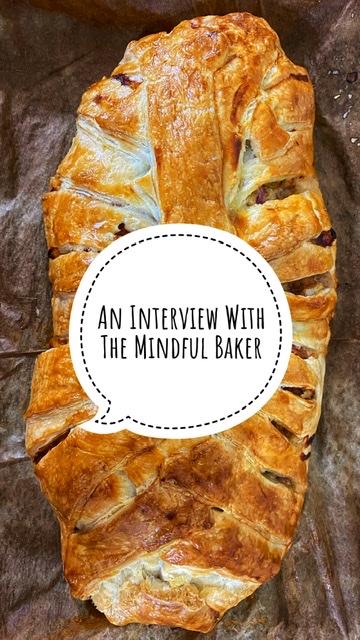
Do you find baking or cooking in general therapeutic? Did you find solace in baking during the covid lockdown periods? Then you will be interested in my guest this week – Tim Leach is The Mindful Baker and his company teaches mindfulness through the art of baking! Yes, that’s what I said – he teaches meditation techniques as well as how to bake artisan sourdough bread and pizza. Hi Tim and welcome!
Hi! I’m Tim Leach and I am a mindful baker. I teach people life skills through the art of baking by utilising the process of baking sourdough with mindfulness.
What made you decide to launch “The Mindful Baker”?
I had decided to get into mindfulness and consequently qualified as a teacher in order to spread the word of it but I found that people, in general, unless they specifically want to learn about it, don’t have much interest in just learning about mindfulness because they assume it’s very wishy washy and don’t want to get bogged down by meditating and breathing in sweet nothings, so don’t really want to get know much about it. It’s not at all like that but that’s certainly what I used to think so I don’t blame anyone else for thinking the same way. Anyway, a few years ago I had a Christmas party and my cousin brought along a loaf of sourdough. I was delighted to not be given a bottle of cheap wine and said that I would love to learn how to bake it. I eventually learned and then saw a correlation between baking sourdough and mindfulness. It wasn’t an instant thing but over time I developed it into a class and then started giving free classes to neighbours when I lived in London. It grew from there.
Talk me through a typical workshop – what would I expect?
There are a set number of stages that need to be carried out to create a loaf of sourdough, and in between each one, which I call ‘down time’ I explain the correlations between what is happening to the bread and how by following a similar method within your own life, you can start to see it making a difference. I also use these times to explain the concept of mindfulness, give techniques to help people integrate it into their lives; along with my life story and case studies, all the while making it easier for them to understand through the tangible process of baking.
What level of cookery skill would you need to attend a workshop?
None at all, I teach total beginners to pros who want to learn about mindfulness.
What is it about your job as the Mindful Baker do you enjoy or gives you the most satisfaction? The downside?
I love seeing people’s joy when they create bread. I love seeing the ‘aha’ moments in people’s eyes when I explain how something so simple could revolutionise their lives. I love hearing their life stories and I love explaining how I got into it and the shit I went through before being where I am now. The downside is the process of finding new clients which will hopefully get easier over time.
You also hold pizza parties for children. What are the most popular toppings? Do you have a favourite topping?
Kids love pineapple which I do not agree with because pineapple is a sweet fruit which doesn’t belong on a pizza. Once they get over their weird topping ideas they generally love simple margaritas. Kids are easy to please with pizza. My favourite toppings would be chorizo and silly hot chilli, which my wife does not agree with but I love it.
Growing up, did you always want a “People related” career or be a chef or did you want to pursue a completely different direction?
Yes, completely different. I studied Law at university and was going to become a city lawyer. After university I did a ski season before hitting the city and becoming, my then idea, rich and happy. Half way through the season, though, I skied off a cliff and tore my cruciate ligament, broke my back and my neck, shattered my ankle and hit my head so hard I was induced into a coma for 3 weeks. The recovery was very long and arduous which culminated in me hitting my lowest ever point where I was left with the decision to either let it cripple me or to rise above it. I obviously chose to rise above it and after many years of trial and error, I am finally where I want to be. I have since written a book about my life and how I managed to get myself back on track, up until I became the Mindful Baker, which is called ‘Timinology’.
I know you are passionate about your baking – what is your favourite creation to make?
I actually made my first ever wedding cake the other day after someone messaged me to ask whether I, being a mindful baker, make them. I told her that I didn’t but I’d happily give it a go. She agreed and her wedding is today. Her reaction when she saw the cake was amazement – as was mine. I probably won’t continue with wedding cakes but my cooking love is for bbqing. I love sourcing the best meats and the best vegetables and then creating magic. Not forgetting my trusted sourdough bread to go with it.
Sometimes a recipe doesn’t go to plan – I made a cardamom cake that took me about 3 goes from scratch before it turned out perfect ! Have you tried to bake or cook anything that just didn’t go your way or that you avoid cooking?
The only issue I’ve ever had was with the wedding cake. I had to bake 6 different cakes of different sizes in order to make the tiers – the first one was fine and then the second one just completely deflated and then split apart leaking a load of uncooked cake mixture everywhere. It was very demoralizing but it actually turned out to be a blessing in disguise because it made me vigilantly keep checking the cooking times of every cake after that and making sure they were perfect before allowing them to rest. A technique that I would have garnered from my mindful baking classes which otherwise would have seen me throwing it away and quitting; lucky I didn’t do that.
Personal now – what outfits and shoes would you normally be found wearing?
Before I set up the mindful baker I launched another company designing (telling someone what I wanted ) and manufacturing shirts. They were for men and women and were city/casual shirts – something you can wear to the office or just in the countryside. Anyway, I have a lot of shirts now so you will very rarely not see me wearing one of my own shirts. I then normally wear them with jeans, a jumper, a gilet (when it’s cold) and my trusted RM Williams riding boots.
Do you have any favourite shops or online sites?
I hate shopping – my wife knows what I wear so when she thinks I need something new she orders it for me online. I hate any sort of label so if it’s labelled I won’t wear it. Nobody knows what RM WIlliams is (unless you’re in Australia) and it’s also of incredible quality so my last pair lasted me 15 years.
What’s next on your clothes/shoe wish list?
No more shoes for 10 years or so (unless they’re running shoes as I am an avid runner of which I only buy a brand (again noone has ever heard of) called HOKA, which I only wear because I wasn’t able to run for 10 years after the accident until I found these shoes which transformed my life)
Boots or Shoes?
Boots because that is what my RM Williams are and they will last a long time.
For Pinning Later
Links you would like to share e.g. website/facebook etc.
”Lean” is a well known and scientifically proven idea that has transformed businesses for decades – a methodology for focusing on what is really important. According to my guest this week – Lean business expert Michelle Leong – Being Lean means living efficiently and not wasting time, energy and money on the unimportant. I caught up with Michelle recently to find out more about Being Lean. Hi Michelle!
Hello! I’m Michelle. I’m a self-confessed Lean fanatic & dedicated Lean practitioner with almost 20 years’ experience in changing people’s lives and businesses for the better. I am a very health-conscious keen traveller, a monumental food & drinks fan and it may be a midlife crisis thing but I make every effort to look good for myself all the time. My quest for perfection in living life to the fullest makes my staunch advocacy and adoption of Lean in everyday life inevitable & necessary.
Your book, “Being Lean”, is truly inspirational. What made you decide to write your book in the first place?
Actually, Being Lean is the result of my laziness and impatience about doing things twice or taking the long way around. It is basically all about how I increase productivity of my fun time. I hate housework, I hate exercising, I like, but don’t love work. This book is 20 years of how I managed to do lesser of what I don’t enjoy AND still get the same if not better results.
I was already naturally organised, I’m a keen planner, I’m a fantastic time manager but it was only when I started using Lean as a methodology & a structured approach, that I realised that all this time, I’ve been so effective in wasting my time & effort. I was basically just tidying up clutter, when clutter is clutter no matter how neat they are.
I’m a terrible person. I remember secretly judging my colleagues & peers, all those years, for not being truly Lean. I felt they only do it at work, like switching the lights on & off. Outside of work, I remember thinking “what process slobs” they are 😜! I’ve been collecting scribbles & thoughts along the way, knowing I had to put it on paper in a structured manner…to boast about my processes if anything! I only actually sat down to write this book at lockdown.
Lean is a well known and scientifically proven idea – a methodology for focusing on what is really important, and being lean means living efficiently, using time and energy and money effectively … when did you first realise this empowerment that being lean can have over businesses and life in general?
Lean has been around & popularised here in the West by the car manufacturing industry since the very early 90s. Thanks to discovering Lean 10 years later for my work in construction that I’ve been living Lean for almost 20 years. I started consciously applying the methodology “Doing Lean” for work mainly but once I got my Lean glasses on, it felt applicable to all processes including outside of work. Gradually, I evolved to doing Lean outside of work and since then evolved again to “Being Lean” i.e. naturally rather than contrived.
Your book is jammed pack with hints and situations which will help to apply the lean approach in all aspects of life – workplace, wardrobe, home life, travel food and health- even down to sorting your laundry! I was quite pleased to see that my method of sorting out washing being endorsed! Were there any aspects of writing “Being Lean” that surprised you, either by being harder or easier to write about than you expected?
I realised that applying Lean to work is SO much easier. There are many relevant examples and much expertise out there for us to learn from and even duplicate. At the same time, we are held accountable for our productivity and quality of work so we do it more consistently as it is necessary for our livelihood. We push ourselves more and we try harder. Whereas, privately, we only have to account to ourselves. There are no immediate consequences, or if there are, we deem them to be of less magnitude as time loss is less apparent than the loss of cold hard cash from a paycheque. Hence, application of Lean outside of work is so much less consistent. I am actually surprised after-the-fact that I have enough to structure this book in a coherent and hopefully, easy to follow way. When I finished it, I felt incredibly lucky that I had been doing Lean for such a long time and so consistently that I was able to follow through, fill out that many chapters and achieve the flow.
You have been advising businesses on lean practices for 20 years and you were part of the team that introduced lean to the construction industry in a government funded Construction Lean Improvement Programme (CLIP). What sort of lean recommendations were introduced?
We started from scratch with Construction. Everyone was strongly sceptical. CLIP offered the industry free consultancy & lean projects hoping to get wide uptake of the thinking & practice. We went out touting companies to apply Lean to their construction projects. Construction teams are dynamic & they change with each project so you can imagine how difficult it is to achieve sustainable organisational results. You keep starting from scratch with each new project, teaching them the theory & methodology then applying it practically on site – learning by doing. We persevered & slowly noticed the difference when project percentages slowly evolved from 90% on building sites & 10% in boardrooms to 50%-50%. This meant the industry was starting to adopt the Lean approach of looking at the bigger picture, doing a diagnostic i.e., identifying waste in the process & doing the business case of prioritising where best to invest in improvement efforts. It’s always leaner eliminating waste further upfront the process when they aren’t as big, before they snowball & become more expensive problems down the line i.e., manifests when you are actually constructing the building.
What aspects of Being Lean did you personally find hardest to adopt and adapt into your own lifestyle? What aspects did you find easiest to incorporate?
As human beings, we rotate towards the easiest to do. For me, with Lean, it was a gradual process. It started out with huge concerted effort to learn & then to do. But with each effort, like everything one does, it got easier & the interest grew because the benefits prevailed & I wanted to know more. It became a challenge to be better at it & a lifestyle and quest to make as much of my processes leaner. Suddenly, I’ve become anal retentive, which I take as a compliment. I have to say it is a creep process & still creeping! Unlike weight creeping up with age, this is a positive creep from flexing & using the Lean muscle. I just transitioned from consciously Doing Lean to Being Lean. I ended up getting flow in my processes without thinking about it. I see waste & combat them bit by bit, it’s no effort for me but might be a crazy effortful to a beginner. Whatever my processes are now, it’s taken 20 years of Being Lean. I’ve even process mapped my relationship, doing risk analysis to look for issues & their impacts. I use root cause analysis to manage my “flare-ups” to maintain that precious relationship. I’ve just celebrated my 31st year anniversary with my husband 🥰😎.
Growing up, what career aspirations did you have?
I was born in Singapore & became a “Singapore Girl” (flight stewardess) very young at 18 so never “had time” to aspire to be anything else. I regretted not going into higher education then as there was no such thing as mature student in Singapore in those days. Once the opportunity passed you by, it’s gone! Thankfully I met my husband & got a second chance when I moved to Sweden in the very early 90s. I learnt the language & took the university entrance exam & never looked back. It is thanks to this, that life led me to Lean.
Is “Being Lean” available to purchase worldwide?
The book is available for sale on Amazon & many bookshops like Waterstones online. On the Being Lean website, the hardcopy is available worldwide, IF one is willing to pay postage at cost. The e-book is available on the website for download wherever you are in the world & the audiobook is underway and will be available on the website soon.
Personal now – what outfits and shoes would you normally be found wearing?
When applying Lean Thinking to our Health. Lean states that ill-health & bad lifestyle are defects in a System, our System. Whether it is self-inflicted or due to circumstances or environment, the point here is not to blame but to find out why. What are the wastes & what are the root causes? If we apply the methodology & use the Waste Glasses, we will get a diagnostic of the causes of these defects so we can work on preventing or managing them. I’ve worked really hard on my health & fitness. As an outcome of Being Lean, I’ve been fasting & lifting heavy weights for the past 10 years. I am at my tippest-toppest condition having just turned 50 this year and planning to keep it that way.
I adopt the Lean visual management tool to maintain status. My wardrobe has been designed to induce my correct behaviour. I no longer have baggy clothes that allow me to hide the consequences of long-term unhealthy living or bad choices, whether this is food, fitness or the mental confidence to rock an outfit. I only wear snug clothes to restrict the amount I can indulge in. Snug clothing visually displays quickly and obviously when I over indulge in one meal but also when I have been lax over a longer period. This triggers me to rein things back. My reward for the consistency is looking & feeling strong & powerful.
I have been wearing a LBD (little black dress), benchmarking (a Lean tool) for my 40th, 45th & 50th birthday. We’ll see if it fits on my 55th!
Do you have any favourite shops or online sites ?
I used to shop quantity above quality & have loads of unused clothes that I’m still going through. Nowadays, I only shop online and for specific style/design that I know flatters me and I never follow trends. I’ve taken on board the Lean concept of modular dressing i.e., having a few different basic accessories & layers of clothing, mixing/matching & getting triple the look from them to suit all occasion & seasons. I’ve got a few websites bookmarked including The Outnet, Joli Closet, TK Maxx, Selfridges (when on sale), occasionally ASOS etc. and charities like Sea Shepherd, which don’t have much of what I want to wear but I buy for presents periodically to give them support.
What’s next on your clothes/shoe wish list?
I’ve got more clothes & shoes enough to wear a different outfit every day of the week! But I’m also a huge accessories person so I’ve got a couple of items on my wish list currently including a Gucci Lionhead gold-toned brass and bead ring & Maje’s Precious Day of the Week ring.
Boots or Shoes?
I’m a wedge (ankle & knee) boots for autumn/winter & wedge sandals for summer, kind of gal. Wedge being key because it started with me having plantar fasciitis from training too much and not being able to wear flat shoes. Now I can’t be without them because they are very Being Lean! It allows me to not compromise on “quality” as they are comfortable, looks good (feminine the way I like it) & gives me the height to make me look tall & slender. I can walk on wedges for hours on a glorious fun London shopping day out! I’ve got 3 colours of the same Hush Puppies wedge sandals that are very comfortable.
For Pinning Later
Links you would like to share e.g. website/facebook etc
My thanks to Michelle for agreeing to be interviewed and to Ben Cameron of Cameron Publicity for a copy of Michelle’s book “Being Lean”. All photographs have been published with kind permission of Michelle Leong (apart from the Pinterest & header pics which are by Linda Hobden)
IDD Therapy – “Intervertebral Differential Dynamics” is the fastest growing non-surgical spinal treatment with over 1000 clinics worldwide – 34 of them in the UK alone. I talk to Michael Furlong, an osteopath for over 20 years and Clinic Director at Balance Health Centre in Liverpool. Michael is passionate about spine care and so is the perfect person to answer my questions about IDD Therapy and back pain in general. Hi Michael and welcome! 😊
Hello 😊 My name is Michael Furlong. I am 55 years old and have been a registered osteopath since 1999. I have two sons and the younger is also training as an osteopath, and two cockapoos: Bobby and Dexter.
What are the common causes of back pain?
The most common causes of back pain I see regularly are predominately muscular skeletal lower lumbar sacro-iliac with related disc problems. This then causes symptoms throughout the body causing knock-on compensatory symptoms.
Why is it important to get treatment as soon as possible for back pain, neck pain & sciatica?
It is important to seek help immediately once you are in pain. If you leave it too long, the problem becomes chronic. Chronic pain basically means the problem has been there for 6 months and longer.
That means you have been living with pain for a long time, this becomes harder to treat and takes more time to improve due to compensatory changes in the body.
There does seem to be an order for back pain. The patient will try medication, then their GP, who will refer to a physiotherapist, then the client will try acupuncture and / or sports massage. Then they end up at the last chance saloon, which is me. This pattern only changes once the person has attended my clinic.
One of the treatments you offer is IDD Therapy – what is this treatment?
IDD is a non-invasive spinal disc treatment. Basically, it means non-surgical spinal decompression! In other words, it’s a very specific scientific traction that works on a particular segment of the spine and not just general traction. This allows the discs to heal naturally in a controlled, safe way.
IDD has been a revelation for me personally. I discovered IDD after I had a disc problem causing complete numbness from my knee down into my whole foot. I attended the Buxton clinic where Phil sat with me, explained everything and recommended two sessions a week, with a minimum of 10.
Every session there was an improvement until I had feeling back. Amazingly, I had so much more movement in my spine that I actually started laughing in my yoga session at the increase.
Who are the typical candidates that you would recommend for IDD Therapy?
Typically, a candidate for IDD needs an up-to-date MRI scan. This will show up people with trapped nerves, bulging discs and arthritic changes in the lumbar spine causing bony growths known as spurs which pinch the nerves. Age is not a factor. I have had 20-year-olds up to 90-year-olds. As long as it’s safe to do so, you can treat anyone.
Although you are based in England, is IDD therapy available to use throughout the UK and worldwide?
IDD is becoming a worldwide phenomenon. In the UK it is becoming widely available, with more clinics adding this amazing treatment to their new and established clinics.
You have been an osteopath for over 20 years – have you always wanted to be an osteopath or did your career aspirations lie elsewhere?
When I was younger I was a youth player with a professional football club. I received an injury that effectively stopped me from playing. Quite simply, it was an injury that wasn’t diagnosed properly. After 3 years of incredible pain I ended up at the door of an incredible osteopath, who not only diagnosed my problem but eventually relieved the suffering.
That was it! I wanted to be an osteopath. There was no internet or mobile phones to research courses but, after a few years, I eventually got accepted into Oxford Brookes. I have never looked back. I love my job and I am learning new things constantly.
Apart from IDD, what other treatments do you recommend for back pain?
Apart from IDD I truly believe that any therapy that helps you personally has a place in treatment. Obviously, I am an osteopath but physiotherapists and chiropractors all do incredible work. Massage and acupuncture both work. I am a firm believer of prevention, so yoga, Pilates and tai chi are also high on my recommended to do list.
For Pinning Later
Personal now – what outfits and shoes would you normally be found wearing?
I am from Liverpool, so there seems to be a uniform ethic with clothes. The influx of students brings an amazing, eclectic style.
During the week, for getting to work and dog walking, I am a North Face Berghaus style; comfortable weather proof. I love North Face reaction t-shirts.
At weekends, its more jeans or chinos, but definitely Hugo Boss. I love their fit and the quality is very good.
I am a bit off a coat freak. I have way, way too many coats but I love to layer my coats when I can.
Do you have any favourite shops or online sites ?
I am always amused, every year how a fashion brand can update the good old polo t shirt. I have tried so many styles, but Hugo Boss fits me perfectly. Ralph Lauren and Sunspot do nice polos.
When it comes to sunglasses, Oliver Peoples does amazing designs and Persol always look classy.
Online, I use a site called Thread. They give you a personal shopper and tend to style for age, I have bought from them a few items.
What’s next on your clothes/shoe wish list?
I have just ordered a nice Harrington jacket from, again for layering and am getting into new balance trainers. They do some nice designs for the older person.
Boots or shoes?
Boots all day. I love Ben Sherman desert boots and have 4 pairs in all colours. They look amazing and feel amazing. I like the lightweight Timberland boot for everyday wear.
Not an interview with me but an interview with Sid Madge, founder of Meee (My Education Employment Enterprise) ! To date, Meee has transformed the lives of over 20,000 people, from leaders of PLCs and SMEs to parents, teachers, students, carers, the unemployed and prison inmates. That is a lot of people! I caught up to Sid to find out more about Meee ….Hi Sid and welcome 😊
Hi, my name is Sid Madge.
What made you decide to launch Meee (My Education Employment Enterprise)?
I started the Meee program after I was giving a talk in a school in Wales to a group of young teenagers. I asked them to describe themselves using one word.
The first lad I asked answered “weirdo”. I smiled and said well what a great word, so creative. And he said, “No I’m bullied, I don’t like being at school, don’t see the point in education and don’t like learning”. I was horrified. I went round the rest of the class andothers used words such as freak, misfit and weirdo.
That session had a profound effect on me, so I did some research on young people and mental health. I started running workshops in schools with teachers and then worked with the unemployed and people in prison. I did a Tedx Talk and wrote my first book and followed up with two more.
My belief that this really could work, grew.
We started working with businesses and we’ve had tens of thousands of people through our programmes. We’re developing specific tools for personal development, and professional development around leadership, around culture. It’s been an amazing journey and I’m very grateful.
I guess your job isn’t an easy one as some people’s aversion to change is not that easy to solve! What sort of reasons hinder their adaptability?
Yes, people have multiple barriers to change. There’s a great saying is there no one likes change, except a wet baby!
Too often we see the process of change as negative and that’s what makes it so hard. We have to accept the situation we’re in and then create change – think of those amazing people who have got through extraordinary adversity, for example, Helen Keller, John Wilson who started sightseers International. It’s those people who have determination and the ability to regard change as positive. Others include Kobe Bryant who sadly died last year, Michael Jordan Ariana Huffington. They embrace change and that’s what Meee does.
What approach do you tend to use to help people believe in themselves?
It’s best to start in safe conversation, exploring values and where our thinking comes from.We’ve got a great programme called Fuel and that’s all about Feelings and Understanding Emotions and Logic and Learning. I think once you start having those conversations around values, purpose and your own performance goals people start to change. They realise that they are their own instruments of change. They may have developed negative beliefs but a process like this can help them change their internal script, and help them change their lives.
What is it about your job (& Meee) do you enjoy or gives you the most satisfaction? The downside?
I love what working both with young people and adults and taking them through a process of change. People of all ages have change their lives, but they do the changing and we’re there to guide and support.
When you listen to the stories of what they’re achieving for themselves, for their families, for their friends, for their communities there is no greater gift.
The downside? I want more people to do the programme but finding the money is often challenging. But we’re getting more corporations involved so that we can then subsidise the education work and work in prisons.
You are also an author of “Meee in Minute” series of books which each offer 60 ways to change your life – work or family – in 60 seconds. What are 5 of your top tips?
• Words matter – think about the words that you use and how they impact others
• Never stop learning – there is so much to learn from yourself, from other people from going places, from doing things e.g., reading, writing, watching films etc, exploring the world. There is learning in everything that we do.
• Remember that we all matter. Every single person matters. We’re all in this together and everybody can make a huge contribution to this wonderful world when you find your purpose and your passion.
• Think about the energy that you have – it’s a finite amount that we get every day so spend it wisely,
• Honour your negative feelings. We all have them in a regardless of who we are. What’simportant is to acknowledge them but not to feed them. If you’re in a bad mood find out why, and what you can do to move the dial and put yourself in a better mood.
Growing up, did you always want a “People related” career or did you want to pursue a completely different direction?
At one point I wanted to be a vet, but I thought I wasn’t clever enough! I discovered the world of branding and design which has been great to work in, but it was never truly fulfilling. When that young lad said the word weirdo that changed everything.
Do you think the COVID pandemic has made a difference in the people’s mindset regarding change and life in general?
I think Covid has changed a lot of things. It has made some people more fearful but it’s made some more optimistic. It’s made us question things and what is truly important. I hope we’velearned that we’re not invincible and need to look after each other and this wonderful planet.
As you are based in the UK, are your services available worldwide too?
Personal now – what outfits and shoes would you normally be found wearing?
Trainers shorts and T-shirts mainly. I love being casual but also love dressing up smart too for the right occasions.
Do you have any favourite shops or online sites?
I love John Lewis and Fortnum & Mason. For convenience Amazon is useful – although I don’t think they aren’t doing the retail world a huge favour at the moment.
What’s next on your clothes/shoe wish list?
My clothing Wish List is more about the children. I have three young children and I like buying clothes for them. I also like finding second-hand clothes. Recycled cool stuff is good for me especially as since the start of Covid I haven’t had any in-person meetings.
Boots or Shoes?
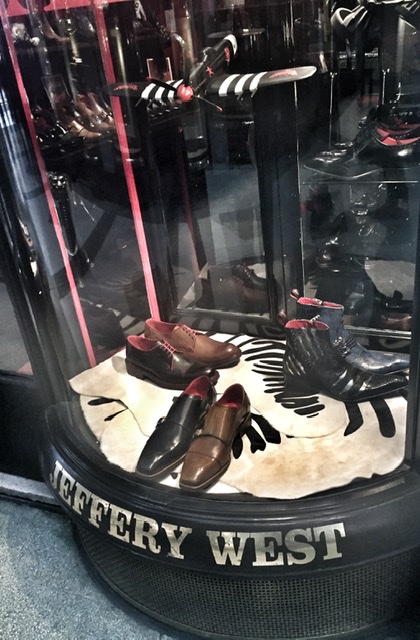
I used to wear a lot of Jeffrey West boots love love love his boots but now it’s trainers, it’s shoes and I love my slippers.
During lockdown I read a book that was sent to me to review by book publicity agent Ben Cameron – a book which made me laugh, cry and pine for a night down at my local pub to “people watch”! This book was called “The Sadness of The King George “ by author & musician, Shaun Hand. It was a book that was laugh out loud funny; the characters were absolutely believable; and, as it says in the book blurb, “unflinchingly honest”. The story is set in a local, rundown pub “The King George” in the West Midlands – an old style pub that has sticky carpets and tables, soggy bar towels, regular customers who sit or stand in the same places exchanging the same words of wisdom; the Saturday night aggro; run by the pub landlord, the Gaffer, who no one sees; the mouthy barmaid, Siobahn, who runs the place like clockwork although no one really appreciates her; the pompous barman; the young 20 year old barman who wonders if there is more to life than pulling pints, pondering over love and looking forward to the next fag break; and Amy, the new young barmaid – full of hope and object of desire. Written from the viewpoint of the 20 year old barman as he tries to find his way through life especially when it comes to love, work and being cool. So, it was with great pleasure that I was able to catch up with the author Shaun … Hi Shaun & welcome…
Hello, I’m Shaun Hand. A life-sized writer, musician, charity shopper, and amateur gardener from Birmingham (the UK one).
“The Sadness of the King George” is a refreshing modern tale of life from the old pub – a young 20 year old unconfident lad who serves the locals, the confident barmaid, the landlord, the characters who frequent the local on a daily basis – What made you decide to write “The Sadness of The King George”?
Thanks! I wanted to write it ‘cos that’s the world I lived in from the time I was 18 to 35, pretty much half my life! It’s a world that’s dying as the 21st century establishes itself, and so I wanted to capture it realistically, good and bad.
The book characters are all absolutely believable and probably found in most pubs in the UK – as you worked in pubs and bars in your twenties too, were your characters based on observations of people you’ve come across in the past and incidents you’ve experienced ? Who were the hardest characters to portray?
Totally — although some were exaggerated or embellished for effect. The hardest one to portray was probably the narrator because although he was partly based on me at 20, he was also based on about four other people, and so I had to be careful sometimes not to just make him do or think what I would do in real life.
Your first book was “Pop Art Poems: The Music Of The Jam” – vastly different genre to “The Sadness Of The King George”. Were there any aspects of writing your book that surprised you, either by being harder or easier to write about than you expected?
It was the first time I’d ever written a long-form piece of fiction, and I think the biggest, most pleasant surprise for me was a point pretty early on where one of the characters started telling me what they should say and where the story should go rather than the other way round — I realised that they’d come to life and that it was becoming more of a novel than an idea.
Hypothetically speaking, if you could go anywhere in the world to get inspiration for another book, where would you go and why?
I don’t think I’d need to go anywhere specific, really. I tend to write about smalltown, suburban England, so maybe somewhere to escape that! I’ve got a romantic notion of going off to a B&B in Llandudno or somewhere for a week and just writing.
Have you always wanted to have a career in writing or did you have other aspirations?
I always wanted to be a professional musician, but having tasted the reality of the work involved to barely make ends meet (leaving your family for months on end to go touring etc)and some of the darker side of it, I think I’m happier and more fulfilled being a writer who does books, music, poetry, whatever takes my fancy. Right now, that feels more liberating to me than any amount of distance I could travel to play to four people for no money (or even no people for four money).
Are you a bookworm? What is your favourite genre and/or authors? Kindle or actual book?
I am, and I read more and more avidly as I get older, but I don’t have a favourite genre. I love anything with a good story and vivid characters, but then I also love a good music or author biography (I’ve just finished Billy Bragg’s book about skiffle, which was brilliant). The only author I’ve read everything by (even the bad stuff) is George Orwell. My wife put me on to Sarah Waters, and I’ve really got into her; Fingersmith is a brilliant book. Also slowly working my way through David Bowie’s 100 Favourite Books list, although some of it’s a little too dry for me.
And books, absolutely, every time. I can’t walk past a charity shop without having a nose. Kindles just don’t have that magic, or the smell.
Is “The Sadness Of The King George ” available to purchase worldwide?
Yes. You can either line Jeff’s Bezos’ pockets or contact your local indie bookseller. It’s orderable through Waterstones too.
You are also a musician with your band FABRIK – what instrument do you play? What music genre?
My main instrument is the guitar, but I also play piano and bass and make drum loops for us to write songs over.We’re pretty trip-hoppy but a bit weirder. If you like stuff like Portisheadand Massive Attack, then we’re probably your kind of thing.
Personal now – what outfits and shoes would you normally be found wearing?
I flit between two extremes: trackies and trainers if I’m round the house, just nipping out, or just want to be comfortable. If I’m going out, DJing, gigging, or just want to look good, then it’s a suit with some nice loafers or these black-and-white 1920s-style shoes I got from one of those “4 shiny suits for £10” kind of shops years back.
Do you have any favourite shops or online sites ?
For clothes? Probably H&M. I live in Wolverhampton and everywhere else decent has shut down. Increasingly, I’m getting stuff from charity shops; I don’t like buying clothes online really.
What’s next on your clothes/shoe wish list?
I’ve got me brother-in-law’s wedding coming up, and I’d really like to get a decent dark blue, fitted double-breasted suit for it, but I can’t find one that wouldn’t make me look like an early ‘90s Tory MP. Beyond that, I’ve got a few suit jackets from charity shops that need taking in.
Shoe-wise, I’d love some decent brogues and could do with some boots — trainers with jeans limits the kind of top you can carry off, and loafers with jeans can be dangerous territory. I need some new wellies too for me gardening.
Boots or Shoes? ( & Why?)
Shoes because I like wearing brightly coloured socks (teddy-boy style, not ones with novelty patterns).
For Pinning Later
Links you would like to share e.g. website/facebook etc
Thanks very much for the nostalgia trip – I really enjoyed the book and the customer antics! Thank you Ben Cameron for sending me the book to read and review in the first place.
Linda x
The photographs of Shaun have been published with kind permission of Shaun Hand; the other photographs were taken by LindaHobden.
I’m excited to introduce my guest this week – entrepreneur, publisher and business coach Judy Piatkus! Judy founded Piatkus Books in 1979 and in April 2021 she released her first full-length book & memoir “Ahead Of Her Time: How A One-Woman Start Up Became A Global Publishing Brand”. Without further ado, let’s say Hi to Judy …
Hello! My name is Judy Piatkus and I am an entrepreneur and former publisher, wife and mother.
What made you decide to write your memoir ahead of Her Time: How a One-Woman Startup Became a Global Publishing Brand?
Throughout my working life, women have asked me how I grew my company alongside bringing up my family as a single mother. I wanted to share my story now to help women who want or need to start up on their own.
You founded Piatkus Books in 1979 from your spare bedroom. What inspired you to start your own business?
I had a dream of starting my own business and being my own boss and I built my first business with a partner. When that business relationship didn’t work out, I started again on my own.
Were there any aspects of writing your memoir that surprised you either by being harder or easier to relate than you expected?
The book tells the story in a linear way. However, I wrote the chapters that I found easiest first and then put the whole story together.
As well as being a keynote speaker, you are also a coach/mentor to business startups. What main parts of your management style and experience from owning Piatkus Books do you try to impart to other budding entrepreneurs?
I believe that every one of us wants to have the opportunity to do good work. The onus is upon the leader of an organisation to create a culture in the workplace that empowers and inspires people to give of their best. This requires the leaders and the managers to understand themselves well and to treat their workforce with respect and in the way they themselves would like to be treated.
Have you always wanted to have a career in the book/ publishing industry or did you have other aspirations?
From a young age I was an avid reader and I could think of nothing better than working with books all day long. I always felt very lucky that I was able to work in publishing and read and publish novels that people enjoyed and non-fiction that opened their minds to new ways of thinking about their lives.
Are you a bookworm? What is your favourite genre and/or authors. Kindle or actual book?
After I sold the company I thought I would read more than I do. Like so many of us, I get distracted by reading articles on the internet. However, I always read a lot on holiday. The topics I still enjoy most are the genres we published – popular fiction especially crime novels and books about relationships – and interesting new books about personal growth and spiritual development. I always prefer to read a printed book and avoid another screen but kindle has its uses.
Is Ahead of Her Time: How a One-Woman Startup Became a Global Publishing Brand available to purchase worldwide?
Watkins, my publishers, have sold copies of the book all over the world. You can buy the printed book, download it onto your kindle or buy the audio version and listen to it.
What do you enjoy most about speaking to audiences?
Speaking is an opportunity to inspire people to follow their dreams. I like to find out about the audience before I speak so I can target my talk to what I think will be of interest. Publishing is a very complex industry but it’s one that everyone can understand. I am usually asked many questions about becoming an entrepreneur or how to get a book published and that keeps me on my toes.
Personal now – what outfit and shoes would you normally be found wearing?
I like to look smart but I am a lazy dresser. Throughout my publishing career I got up every morning and put on a black top and black trousers and I had a variety of different jackets to go over the black top. That way I didn’t have to spend too much time thinking about what to wear. My favourite designers are Armani and Max Mara but I could only afford 5 outfits – one for each day of the week – and when one wore out, I replaced it. I usually wore comfortable but smart Russell and Bromley boots so I didn’t have to think about footwear either.
Do you have any favourite shops or online sites?
Large department stores such as Selfridges, Harrods or Harvey Nicholls always excite me. I also like individual carefully-curated small boutiques especially in towns outside of London.Its been such a tough time for the retail industry and I do hope that many of these shops are able to survive. Now I don’t have to go to an office every day I buy a lot of clothes in Gerard Darel as I like the variety and the cut. I much prefer trying before buying so that I can choose clothes that fit well.
Aside from clothes stores, I am unable to walk past a bookshop without popping in. I try and buy as many books as I can in bookshops because if we don’t support them, we won’t have the luxury of browsing and discovering unexpected treasures.
What’s next on your clothes/shoe wishlist?
I want to have exciting places to go to where I can wear some of the clothes in my wardrobe that haven’t had much of an outing in the last eighteen months. Yesterday I was walking down the street and a very elegant woman came out of a block of flats nearby. She looked amazing and it reminded me how we have all got used to dressing-down. I want to dress up again.
Boots or shoes? (& Why?).
I have always been a boot person. I want life to be easy and I have always found it more comfortable to walk around town in boots rather than shoes. Wearing my favourite pair of boots with heels, I always feel I can conquer the world!
Fabulous to “meet” you Judy and thank you for agreeing to be interviewed. I am so with you on the dressing down issue … I can’t wait to start dressing up again and visiting exciting places! 😊
Linda x
All photographs have been published with kind permission of Judy Piatkus.
I’m pleased to be part of the “Sins Of Our Mothers “ book tour to celebrate the latest Dystopian fiction by author Nicole Souza. Dystopian fiction isn’t a genre I’m familiar with but as I read “Sins Of Our Mothers” with an open mind, I found myself getting totally engrossed with the storyline and the characters. This is a great book to read on the sunbed as summer approaches….
Book Summary
It has been fifteen hundred years since the solar flare devastation of the Global Catastrophe. Due to the radioactivity in the harvesting fields, society dismisses its defective children as nothing more than flawed products of the malfunctioned seeds in the field.
But Lyratelle, a hyper-observant musical prodigy, believes these “defects” are intelligent, particularly her own sibling, the youngest child of her impervious mother. Abandoning her dream career, Lyratelle climbs the bureaucratic ladder to run the Defect Research Center, where she can safeguard the child.
With an underground team of women who share her uncertainties, Lyratelle unearths the Old History truth that womankind’s survival actually hinges on the existence of these defects.
When General Sarah Love, the city’s most powerful advocate against the defects, detects Lyratelle’s sympathy toward the creatures, she threatens the life of Lyratelle’s sibling.
Now Lyratelle’s desperate attempt to save this child endangers everyone she loves—her team, her family, even the existence of the defects themselves.
Print Length: 358 PagesGenre: Dystopian FictionASIN: B08FNMQ3XVPublisher: E.L. Marker Sins of Our Mothers is available to purchase now on Amazon.com.
MY INTERVIEW
It is with great pleasure to welcome Nicole Souza onto the blog. Hi Nicole!
Hi! I’m super envious of ancient philosophers. I imagine they gathered in groups, passing around their favorite snacks while stretching their aching joints, immersed in discussions surrounding the questions that link human hearts: Where did we come from? Why are we here? What is truth? How can we maximize joy and minimize suffering? What is the meaning of family relations? Where does death take us?
I’m envious, that is, until I realize this is the very scene at my family girls’ nights. Though overall our society dedicates less time to questioning mortality and our existence in general due to the insane velocity of modern demands, we’re all philosophers in our souls.
Conversation is my fuel. I love people. I love others’ unique stories. I love finding connections with members of the human family who live oceans apart from me, who speak other languages, and whose experiences are vastly different from mine. While I was born and raised in Salt Lake City, Utah, USA, my husband was born and raised in Manaus, Amazonas, Brazil. Our upbringings, and the way we experience life, are so distinct. I’m profoundly grateful.
Among my immediately family—parents and eight siblings—are spoken seven languages: English, Spanish, Portuguese, French, Tongan, Mandarin, and Dutch. Among my siblings-in-law, including one who passed away thirteen years ago, are five ethnicities and four nationalities. My nieces’ and nephews’ heritages span the globe. Most are being raised in bilingual households, three of whom live in beautiful Taiwan where English is their second language.
If all I had in life was a pretty piece of land and my family to enjoy it with, I’d want for nothing. I love my people.
As if I don’t get enough language in my personal life, I also got my B.A. in Languages with a minor in Women Studies. Growing up I thought I’d study music. I’ve played piano since age five and violin since age eight. Teaching violin was my first job and I thought it would be my last. But I’ll be honest, as much as I love people, especially kids, I’m not equipped with the divine patience needed to teach them how to play musical instruments. Oh, my heart; how terribly, terribly hard that was for me. I’m grateful to have found my thing—writing stories alone in my room surrounded by dogs and donuts.
Who or what inspired you to write “Sins Of Our Mothers”?
In college, I made an astounding observation: nearly all my straight, married girlfriends, and those with a live-in boyfriend, were the sole providers in their relationships. Each one of their husbands or boyfriends was profoundly unhappy and had developed at least one addiction that was affecting their relationship. Though all relatively close to my age, these weren’t just friends here in the states. These were women of multiple ethnicities and cultures.
Some spoke English, some didn’t. Some had children, some were students, some had mortgages, some were renting, some lived with parents or in-laws. The one thing they had in common was an unemployed adult man depending on their salary. The most bizarre detail was that none of the women with children depended on their male partners for childcare, even though they were home all day. They either relied on relatives or paid for professional childcare.
The men’s addictions ranged from simple things like alternate realities to more intense things like pornography and even detrimental things like alcohol and destructive drugs. Some of the men were students. Some were college graduates, some high school graduates. All had essentially disappeared from their families, their communities, and society—a trend I began to notice extended far outside my circle of contacts.
While several of these couples split or divorced, many pulled through and have progressed together. The fact that so many close friends—wonderful, intelligent people—intersected in this weird place all at once felt significant. I remember thinking, “These women literally do everything. They could just remove the men and their lives would remain the same, but without the stress of supporting a grown man and his addictions. All women really need from men is their sperm, right? Aside from that, are men even necessary?”
Settlement 1163 in the novel represents the struggles of those men. Lilac City, where the women live, represents women who bear and raise their children, as well as provide for their families, alone. While the burden of supporting men in their homes is gone, they still, unknowingly, support the men in the settlements through taxes. But the emotional burden of feeling like they do everything alone doesn’t exist in the book because the only world the characters know is a completely female one.
The first draft of Sins of Our Mothers sent me on an arduous journey where I learned that, not only are men necessary, but masculinity is infinitely more valuable than those currently in power would have us believe. There’s a lot of talk nowadays about toxic masculinity. What’s not being talked about is how essential masculinity is to a free, successful, harmonious society. If we’re to achieve our potential as the twenty-first century generation of the human family, and ensure future generations can liberally pursue happiness, we need good men.
The final draft of the book is, I hope, a depiction of what I learned along that journey.
I really enjoyed reading your book, “Sins Of Our Mothers ” and I particularly enjoyed the character of Lyratelle Faith. What character did you particularly enjoy writing about? What character was the hardest to portray?
Lyratelle is my favorite character, too. She embodies female power and the strengths of womanhood as I’ve come to understand them thus far in my life. I hope one day to see someof her relentless drive in myself. But that’s a far, far distant goal. I most enjoyed writing her, inside and out. It’s so fun for me when readers ask about her because it feels like we’re chattingabout a mutual friend. She’s the kind of woman with whom anyone would benefit from a friendship. She’s compassionate, aware of and concerned for the disenfranchised, and constantly striving to better the world for her loved ones and, consequently, the human family.
The character that was the hardest to portray was Grace, hands down. She’s so brilliant and passionate about technology and electronics, which is quite the opposite of me. While I do love many virtual reality games, especially Beat Saber, I have no idea or desire to understand how it all works. I’m grateful there are people like Grace in the world so people like me can undeservedly enjoy their hard work. If everyone were like me, we’d literally sit around all day, passing around our favorite snacks while stretching our aching joints, immersed in philosophical discussion. Grace is so rad because she would dominate those discussions while simultaneously programming virtual worlds and haptic suits.
Researching for your novel must have been quite interesting… did you discover anything that shocked you or uncover some nugget of information that was unexpected?
I learned a lot about IVF. It astounds me that doctors have developed medicine to the point where they can initiate humanlife in a petri dish and reimplant the fertilized egg into the woman’s uterus. Again, I’m grateful these kinds of advanced humans exist in the world. It makes me appreciate even more profoundly the variety that exists among our human family.
Studying pregnancy in general made me appreciate men far more than I did previously. Of course, growing up with an awesome dad, grandpas, three brothers, and more male uncles and cousins than I care to count, I always loved and appreciated men. But really internalizing, not just casually knowing, that women can’t bear children without men was strangely humbling.
I’m so accustomed to women being these independent powerhouses that push through mortal suffering and just get stuff done. Even within pregnancy, the participation between the female and male is so mind-blowingly lopsided, and yet, a woman cannot have a child without the sperm of a man. I spent a ton of time just pondering the significance of this fact. I’d known it since I was a child but somehow maintained this superior image of women that was so distinct from the simplicity of men. I didn’t realize I’d been subconsciously questioning men’s significance.
Well, I don’t doubt it anymore thanks to the research and careful consideration that went into writing Sins of Our Mothers.The world needs good men more than anything else right now. I hope that came across clear in the book.
This novel comes under the genre of Dystopian Fiction – have you ever explored or hoped to write under other genres?
Yes! After the Sins of Our Mothers trilogy is complete, I’ll be working on a fantasy series. I also have a manga-style adventureproject I work on when I need a break from the heavier writing.It’s slow coming because my art skills are about a two out of ten. But I’m inching along. I actually asked my thirteen-year-old nephew recently to take over the drawing part for me as he’s far more talented. I promised to get him some sample pages by the end of the week, so we’ll see.
I’m also working on my mother-in-law’s biography. She has the most fascinating life story and I really want to make sure it’s told.
Growing up, did you envisage yourself as a writer or did you have other career aspirations?
The one commonality I share with Lyratelle is in our youths we both dreamed of being concert mistresses of renowned symphonies, but ultimately chose other career paths. While she went the way of geniuses and hardworking folk, I chose to lock myself in my room with my snacks and write stories.
My private violin instructor was a member of the Utah Symphony. I went to her rehearsals during those career shadowing days in elementary school. I just knew that would be my future. Yet, here I am. It’s been weeks since I even touched my beloved violin.
I did always want to tell stories, too. Being a writer was high on my list of career options. There’s just something about storytelling that awakens my soul. I learn so much better reading and writing stories than I ever have doing busywork. I believe the greatest minds throughout history have taught in parables because stories can be understood by all minds, no matter where they fall on the genius scale. Stories are powerful and unifying.
Is “Sins Of Our Mothers ” available to purchase worldwide?
Yes! Barnes and Noble has international shopping available online. Amazon Kindle International is available in over 170 countries. Amazon also ships hard copies internationally to over 100 countries.
If you could visit any place in the world to inspire your next novel, where would you go and why?
Taiwan, definitely. My sister and her family live there. It’s one of my favorite places I’ve ever visited. Vast cities pressed right up against gorgeous beaches create the perfect setting for a multi-genre/crossover story. There’s so much romantic simplicity in the island’s nature and so much modern hustle and bustle in the thick of the cities. And the Taiwanese people are the friendliest, most generous, polite people I’ve ever had the pleasure of interacting with. I’ve always loved Mandarin Chinese so spending quality time in Taiwan would boost my speaking and listening skills, though I don’t suppose I’ll ever get the characters down.
Having lived in several cities in Brazil, I would say the state Rio Grande do Sul is next on the list. It’s my second home and I miss it every day. Especially the amazing people.
Are you a bookworm yourself? If so, what genres (or authors) do you usually like to read?
My two lifelong favorite books are The Hiding Place by Corrie Ten Boom, and The Giver by Lois Lowry. The Hiding Place is a kind of anomaly as I don’t usually enjoy nonfiction as much as fiction. But The Giver fits right into my type of story. In fact, it shaped my reading preferences quite a lot. I first read it when I was really young so every book since has been measured against it.
I don’t discriminate against any genre as there are good books in all. As long as a story keeps me interested, I’ll devour it.
Lately, I’ve been more immersed in manga than novels. Hajime Isayama satisfied my longing for a well-written story with his amazing series Attack on Titan. I don’t suppose I’ll ever love anyone—real or fictional—as much as I love Levi Ackerman. Though Otcho/Shogun from Naoki Urasawa’smanga series Twentieth Century Boys comes close. I guess I’m a sucker for strong, independent men with traumatizing pasts.
I know it’s cliché, but I can’t fail to mention J.K. Rowling’s mind-blowing talent for storytelling. I know I’m not the only one because I’ve heard others mention how reading the Harry Potter series felt much more like watching. That world truly lives on those pages.
For Pinning Later
Personal now – what outfits and shoes would you normally be found wearing?
If you ever find me at home, it’ll undoubtedly be in a MooMoo and department store ankle socks with my hair down. On a regular day out and about, I prefer tall, form-fitting print T-shirts (likely featuring Levi Ackerman), loose leggings (deep pockets, of course), and Vans slip-ons with my hair in a messy bun. Not because I’m stylish and rock a messy bun, but because everything I try to do with my hair is messy, and buns are convenient when running errands. I’ll most likely be in glasses when dressed casually.
Because I’m aware that none of these outfits are conducive to an adult lifestyle, I do have an alternative outfit for meetings and social gatherings. There, you’ll find me in boots, a long comfortable skirt, a dressy loose blouse, and oversized earrings. I don’t wear jewelry often but when I do, huge earrings and gaudy rings are my thing. When it really matters, I have my sister do my hair.
Do you have any favourite shops or online sites?
I don’t say this as an author: if ever I go somewhere in person to browse, it’s a bookstore. I love the smell of books. Plus, I’m always on the lookout for the children’s book You Are Special by Max Lucado. I keep buying myself a copy only to give it away. It’s such an amazing book. Strangely, it’s often unavailable in stores so I check occasionally to see if it’s stocked.
Online, I spend a lot of time browsing redbubble.com. It’s a great site for personalized gifts and keepsakes, especially if you’re looking for something related to an inside joke. Plus, I adore such shops that feature independent artists.
This might be too bizarre a detail but, being from Utah, I like to hop on ksl.com and visit the classifieds to see what farm animals and RVs are available. I have this dream of buying a little farm and filling it with all the cute animals city living doesn’t accommodate. I also dream of an RV but haven’t found the right one. It’s as important to get right as was choosing my spouse.
What’s next on your clothes/shoe wish list?
It’s been a long time since I had a proper gorgeous pair of boots. That will definitely be my next big clothing purchase.
Boots or Shoes?
Boots! I love boots! Especially being from Utah. A stylish pair of heavy-duty boots that allow me to hike and also hit the town with friends is the best piece of clothing. Winter, summer, rain, or shine, boots work for everything.
I have the feeling I’ll be browsing for boots online in my MooMoo tonight.
Links you would like to share e.g. website/facebook
Great to chat with you Nicole! I look forward to reading your mother in law’s biography too. I hope your farm dream becomes a reality and thank you so much for the advance copy of your book and inviting me onto your book tour. I’ve had a blast!
Linda x
All photographs have been published with kind permission of Nicole Souza



 Follow